
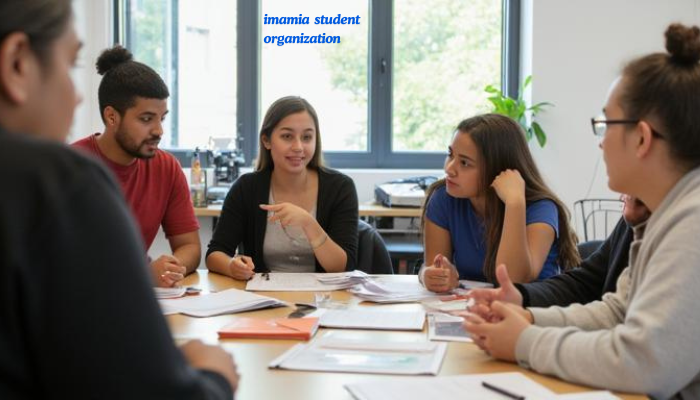
A Student Movement Built on Faith and Purpose
In the landscape of Pakistani student organizations, few have demonstrated the longevity, depth, and consistent influence of the Imamia Students Organization, commonly known as ISO. Founded over five decades ago, ISO has grown from a small circle of motivated students at a single university into one of the largest and most structured student movements in Pakistan. Its reach now extends across hundreds of colleges, universities, and schools, with an active presence in major cities and increasingly in rural areas as well.
What makes ISO stand out is not simply its size or age. It is the combination of ideological clarity, practical organization, and genuine community engagement that has allowed it to remain relevant across generations of students. For many young people who pass through its ranks, ISO is far more than an extracurricular activity. It becomes a formative experience that shapes their values, sharpens their leadership instincts, and connects them to a larger sense of purpose beyond their individual academic goals.
The Founding Story: Where It All Began
The Imamia Students Organization was founded on 22 May 1972 at the University of Engineering and Technology in Lahore, Pakistan. Its founders included Ayatollah Syed Murtaza Hussain Sadar ul Fazil, Molana Agha Ali Moosvi, and others who recognized the need for an organization to help Muslim students preserve their identity and faith while navigating modern academic life.
The early 1970s in Pakistan were marked by significant ideological turbulence. ISO came into existence in 1972 when secular and communist student organizations were dominating educational institutes, and the majority of students who were close to them were Shias. The ISO was formed to save the faith and ideology of Shia students. The ISO also provided financial assistance to deserving Shia students because there was no other institution to aid them in the 1970s.
The founding vision was clear from the outset: education and faith were not separate pursuits. They were complementary forces that, when nurtured together, could produce individuals capable of contributing meaningfully to their communities, their country, and their religion. From its early days, ISO focused on creating structures that could support youth across different regions and educational institutions. What started as a circle of hopeful students soon expanded into units and chapters, embracing students from cities and remote areas alike.
The Core Mission and Ideology
The mission of ISO is to develop its members into law-abiding students who defend the country’s ideological and geographical boundaries, promote Islamic teachings, foster student development, and engage in community service.
More specifically, the mission of this organization is the training and reformation of the youth according to the teachings of the Quran and the progeny of Prophet Muhammad (peace be upon him and his family), so that they may become good human beings and true believers, and by doing so, safeguard the ideological and geographical boundaries of Pakistan.
This dual emphasis on personal formation and national responsibility gives ISO’s mission a scope that goes well beyond typical student organization objectives. Members are not simply encouraged to study harder or attend more events. They are guided toward a holistic understanding of what it means to be an educated, faithful, and responsible member of society.
ISO promotes values such as justice, unity, respect, discipline, and compassion while encouraging students to become role models within society. By nurturing these core values, the organization aims to develop individuals who are not only successful in their personal and academic lives but are also prepared to lead others with wisdom and integrity.
Organizational Structure: How ISO Operates
One of the key reasons for ISO’s durability and effectiveness is its well-designed organizational structure. Rather than functioning as a loosely connected network of student groups, ISO operates through a carefully defined hierarchy that ensures accountability, consistent communication, and coordinated action across different levels.
ISO follows a well-defined hierarchical structure to ensure discipline and effective management, operating at the unit level in colleges, universities, and schools, with each level having elected representatives responsible for planning, coordination, and implementation of activities.
At the national level, the central body, Markaz ISO Pakistan, coordinates and supervises activities across all regions of the country. Among its many regions, ISO Karachi Region stands as one of the most dynamic and active, representing the youth of the country’s largest city and working to address the educational, social, religious, and humanitarian needs of students and the wider community.
This layered structure means that a student joining ISO at a local college unit is simultaneously connected to a provincial network and a national body. The system allows ISO to mobilize quickly for national causes while still attending to the specific needs of local student communities. Regular elections at each level reinforce democratic accountability and give young members hands-on experience with governance and institutional responsibility.
Educational Programs and Intellectual Development
Education sits at the center of everything ISO does, and the organization’s commitment to academic excellence goes well beyond simply encouraging students to attend classes and study hard.
ISO regularly organizes study circles, lectures, seminars, and workshops to improve academic understanding and critical thinking. These activities are designed not just to help students perform better academically, but also to encourage intellectual curiosity. Discussions often cover a wide range of topics, including history, ethics, contemporary issues, and personal development.
One of ISO’s most practically valuable educational initiatives is its book bank program, operated through the BOLD wing. BOLD, which stands for Body of Literacy Development, focuses on the educational and intellectual development of students and youth. Its projects include pre-board examinations, the Imamia Book Bank, scholarships, and the Imamia Guidance Cell, empowering students with knowledge, resources, and guidance for a brighter future.
These programs are especially meaningful for students from lower-income backgrounds, for whom the cost of textbooks and examination preparation materials can be a genuine barrier to academic success. By making resources accessible and providing structured academic support, ISO makes a tangible difference in its members’ educational outcomes.
Religious education is also a structured part of ISO’s programming. ISO organizes Islamic studies courses and discussions that focus on the history, philosophy, and principles of Islam, particularly those related to the Shia tradition. These programs aim to strengthen the members’ religious knowledge and spiritual growth.
Leadership Training and Youth Empowerment
Beyond academics and religious education, ISO is seriously committed to developing its members’ leadership capabilities. The organization understands that academic knowledge without the ability to lead, communicate, and organize is incomplete preparation for adult life.
ISO conducts leadership workshops aimed at developing skills in public speaking, event management, and decision-making. Students learn to organize activities, handle responsibilities, and serve as team leaders.
This practical orientation is one of ISO’s most valued attributes. Members do not just attend meetings and listen to lectures. They plan events, manage budgets, communicate with communities, resolve conflicts, and build consensus. These are skills that no classroom syllabus formally teaches, and the experience of practicing them within the structured environment of ISO gives members a genuine head start in professional and civic life.